Services Landscape for e-Health

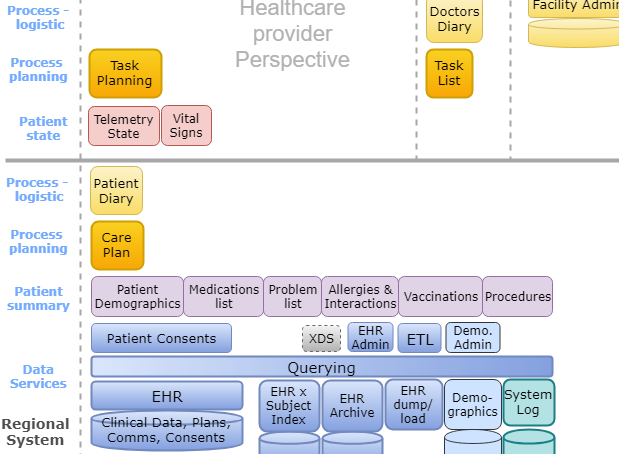
Every so often I get bored of what I am doing and start trying to draw one of those ‘services roadmap’ kind of diagrams for e-Health. These pretty pictures appear in slide presentations, standards, whitepapers etc, but are not often used as a tool to help map out the road ahead, mainly because (I think) they mix too many conceptual levels together. We do however need some sort of vision of the future for defining services. I like my latest version enough that I thought it would be worth putting up publicly to get reactions and input. Please comment and/or add content to the wiki page.
Posted in Computing, Health Informatics, openehr, standards | Tagged , | 2 Comments

FHIR v openEHR – concreta

Some readers may have read my previous post FHIR compared to openEHR. If not, I recommend you do, it is available in Spanish, Japanese and Chinese as well as English. Here I aim to clarify some of the concrete differences which are increasingly common sources of confusion, particularly with the FHIR hype wave preventing coherent thinking in many places. It seems that the human psychological pre-disposition for uncritical silver bullet thinking is as strong as ever, but I still hope (perhaps vainly) that in e-health we can soon get back to real science and engineering.

Continue reading
Posted in FHIR, Health Informatics, openehr | Tagged , , , , | 2 Comments

Why the platform will replace today’s interoperability standards in healthcare

For decades, most of us working in health informatics and e-health have lived on the assumption that ‘interoperability’ is one of the main things we are trying to achieve, and that it is the most important because the lack of it blocks progress on nearly every other priority. In the last decade, the gold version of interoperability has become ‘semantic interoperability’, a fabled Nirvana in which today’s sewers of recalcitrant proprietary data are magically transformed into a sea of pure Evian whose meaningful molecules will be ‘understood’ by drooling next generation apps that will instantly discover what is wrong with each of us, and tell us how to fix it.

Continue reading

Posted in Computing, FHIR, Health Informatics, openehr | Tagged , , , , , | 9 Comments

openEHR Basic Meta-Model (BMM) and syntax major upgrade

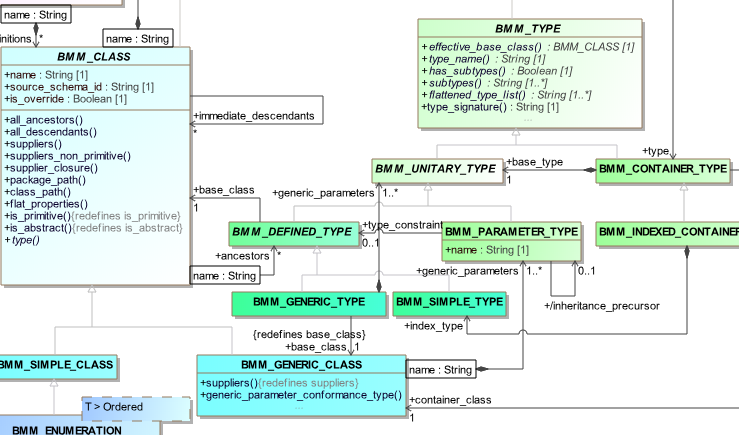
The openEHR Basic Meta-Model (BMM) that has been in use in some form for nearly 10 years now was recently upgraded to version 3.0.0 (from 2.x), with the persistence format (now called P_BMM) being backwards-compatibly upgraded to version 2.3. The purpose of the upgrade was to improve the separation of class and type, and to greatly strengthen the semantics of generic types and classes.

Continue reading

Posted in Computing, FHIR, Health Informatics, openehr, standards | Tagged , , , , | Comments Off on openEHR Basic Meta-Model (BMM) and syntax major upgrade

Standards or toilet paper? A Linus Torvalds reality check

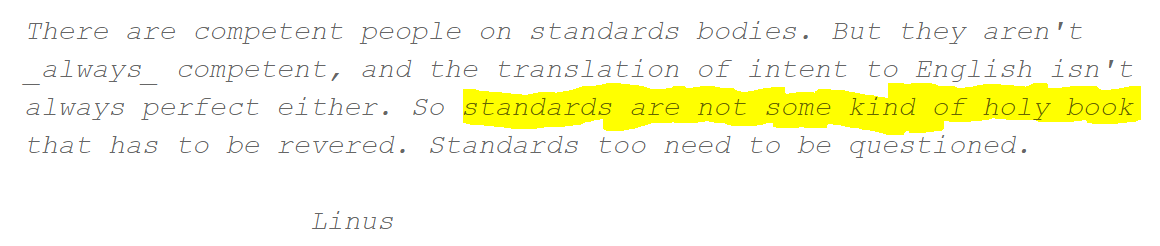
Linus Torvalds, rightly praised for his literary flair and subtlety, serves up a classic today, on the topic of standards and when to just forget about them.

Continue reading

Posted in Computing, Health Informatics, standards | Tagged , | Comments Off on Standards or toilet paper? A Linus Torvalds reality check

Major German research project chooses openEHR

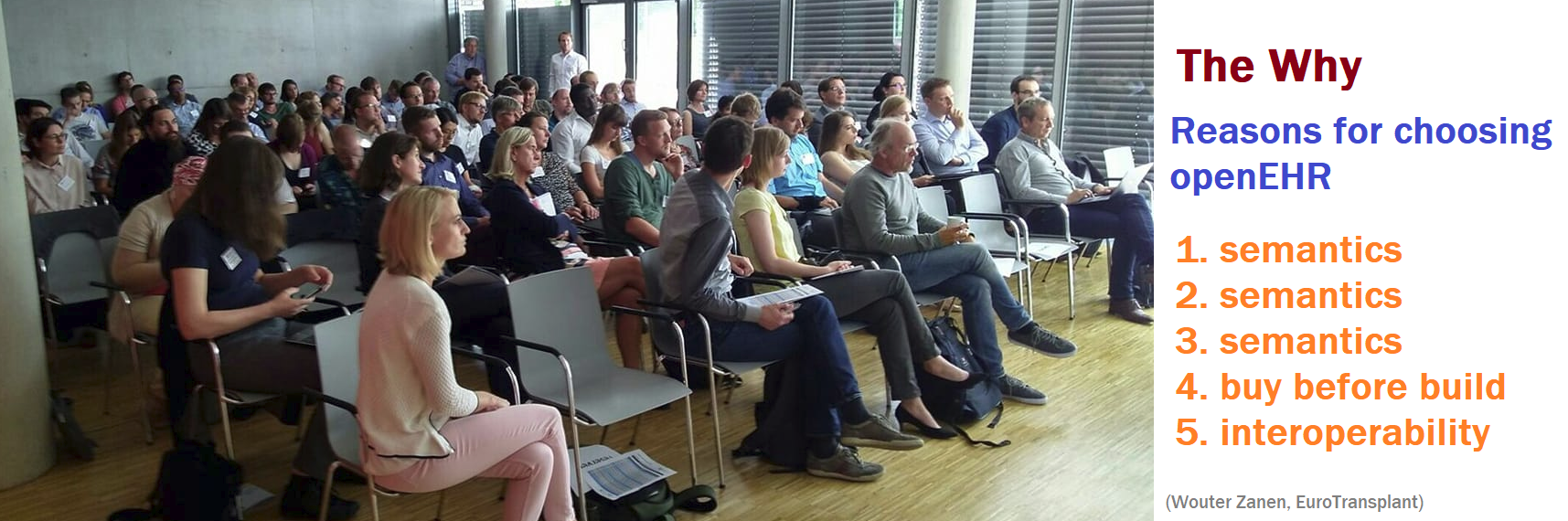
I just returned from Heidelberg, where another very successful ‘openEHR day’ was held, this time by the HiGHmed research consortium, with 100 attendees. HiGHmed is funded with 20m€ by the German Federal Ministry of Education and Research (BMBF) under the “Medical Informatics” funding scheme, and has as its goal (my bolding):

Continue reading

Posted in FHIR, Health Informatics, openehr, standards | Tagged , , , , | Comments Off on Major German research project chooses openEHR

Will the tech giants ever succeed at e-Health?

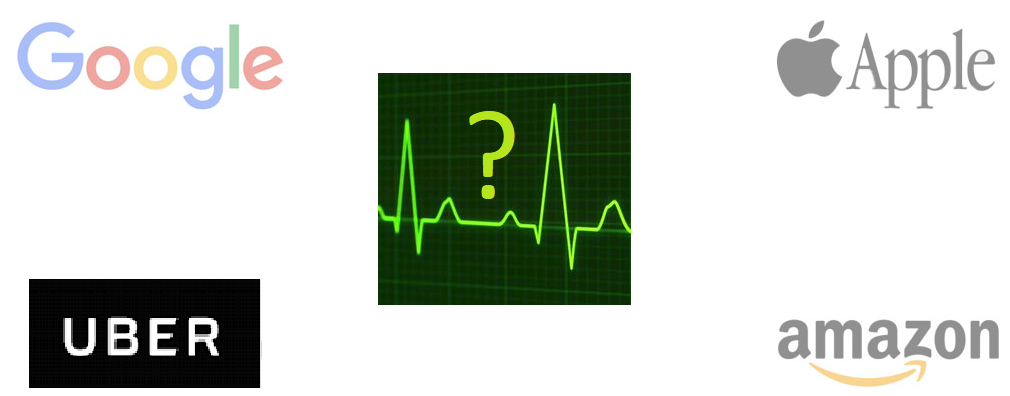
Amazon, Apple, and Google are all having another go at e-Health. But we have been here before: remember Microsoft HealthVault? It’s still around, and still hasn’t taken off. Google Health went live in 2008, but was retired at end of 2011, due to ‘lack of adoption’.

Fast forward to 2018, and we see Apple, Amazon, Google and Uber making new e-Health plays. Initially each corporation will probably work from its strengths – retail delivery for Amazon, booking for Uber, data for Google, and devices for Apple. In the US at least, some of them will build their own healthcare providers for the workforce, and use the environment as a place to work on next-generation health IT solutions. Some challenges, particularly in the devices area, will undoubtedly see progress – there is no doubt that the tech giants do some things really well.

But I remain sceptical about overall success.

Continue reading

Posted in Computing, Health Informatics, standards | Tagged , , , , | 1 Comment

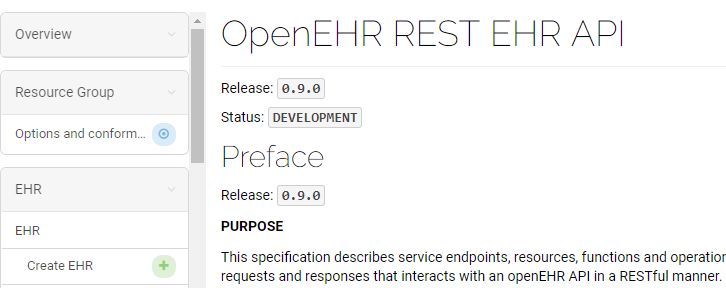
openEHR REST API 0.9.0 out for comment

The REST API Team (Bostjan Lah, Erik Sundvall, Sebastian Iancu, Heath Frankel, Pablo Pazos, and others on the openEHR SEC and elsewhere) have made a 0.9.0 Release of the openEHR ITS (Implementation Technology Specifications) component, in order to make a pre-1.0.0 release of the REST APIs available for wider comment.

LINKS: The generated Apiary documentation can be found here, while the .apib files are here in Github (see mainly the includes directory).

Continue reading

Posted in Health Informatics, openehr | Tagged , , , | 3 Comments

The open e-health platform, coming to an economy near you

I’ve been silent for a while, but luckily an excellent paper on one of my favourite topics – the open platform for e-health has appeared. It comes from the Apperta Foundation, and is called “Defining an Open Platform”; you can get the PDF and also comment here.

Continue reading

Posted in FHIR, Health Informatics, openehr, standards | Tagged , , , | 1 Comment

openEHR Task Planning – heading for implementation

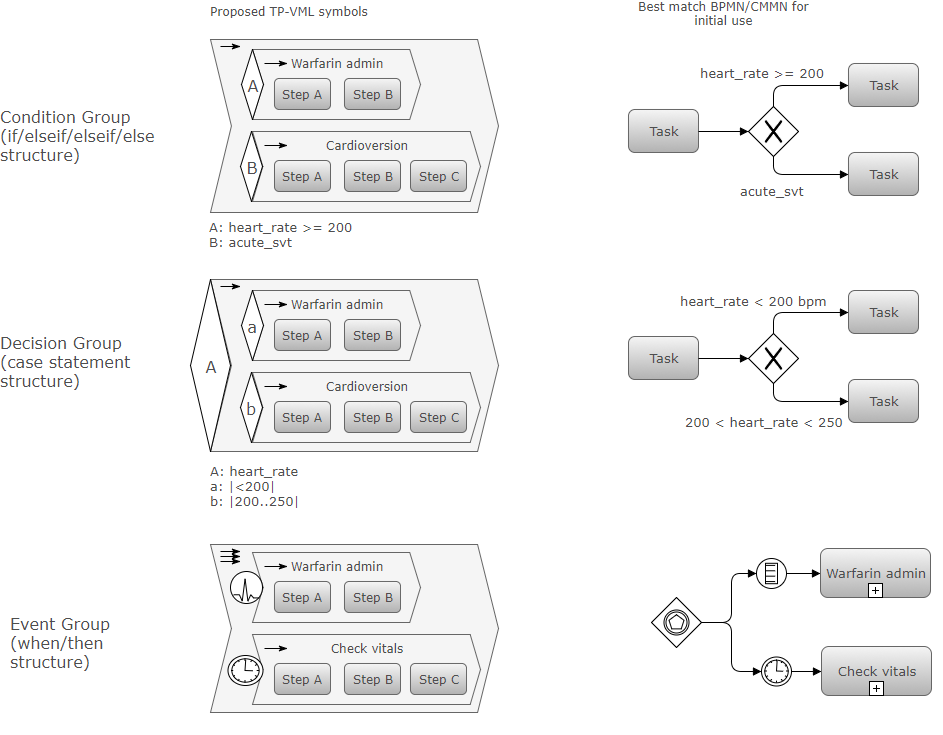
We’ve made a lot of progress since my last post on this topic. We have published a 1.0.0 version of the openEHR Task Planning specification, which will go into implementation immediately in the City of Moscow e-health project. The current version will certainly be changed by that experience, but we believe is good enough for use in implementation, having been reviewed and worked on by our development team, including people from Marand (provider of the Moscow EHR platform implementation), DIPS (largest EMR vendor in Norway) and others from Tieto (Finland) and Moscow.

We are currently looking at creating a visual language for it, of which the above diagram contains initial ideas for the TP conditional structures on the left, with BPMN equivalents on the right.

Continue reading

Posted in Computing, Health Informatics, openehr, standards | Tagged , , , , | 2 Comments