A real world CIMI archetype analysis based on Intermountain CEMs

I have been meaning to blog the recent CIMI meeting (already 10 days ago 😉 but have been buried in ‘work’. So in lieu of that, I’ll put up an analysis of a real use case from Intermountain Health that Stan introduced on the call last night. Don’t expect to get all the details, but it will give you some feel for what CIMI is doing.

The analysis started with the question “should we allow ENTRY to contain ENTRY in the CIMI reference model”? Obviously my response to that was one of horror, since a ‘clinical statement’ can’t contain a c’linical statement’ …

But that’s just me. Let’s backtrack and get the real reason from Stan as to why this might seem necessary. It’s to do with the need to replicate the typical Intermountain lab panel item CEMs and also construct a ‘panel’ CEM, whose contents would be one or more analyte CEMs. At Intermountain, with their different RM, this is understood colloquially as something like an ‘entry’ (the panel) containing ‘entries’ (the items).

The CIMI (and for that matter 13606 and openEHR) Reference Models are not constructed like this. In these RMs, an ‘Entry’ means a clinical statement (which might contain numerous data points).

Here is my analysis. If this could be perfected, it could help us transform the 6,000 or so Intermountain CEMs into ADL 1.5 archetypes based on the CIMI reference model, thereby making a hugely valuable resource more visible to the outside world.

Continue reading

Posted in Health Informatics, standards | Tagged , , | Comments Off on A real world CIMI archetype analysis based on Intermountain CEMs

What is a standard?

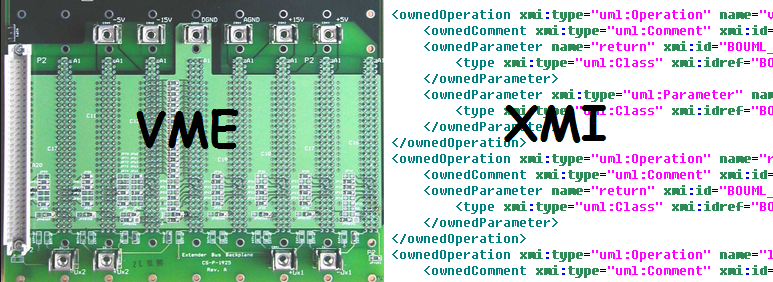
On the left  is the VMEbus, a  hardware bus specification created by Motorola at the time of the 68000 CPU. It uses the Eurocard physical card, connectors and mechanicals (DIN 41612), and adds an electrical/signalling specification (i.e. what do all those connectors do?). The overall specification was standardised as IEC 821 ‘ VMEbus’ (VME = ‘VersaModule Eurocard’). This is a standard. I’ll tell you why in a moment.

VME_XMI

On the right is XMI, the OMG’s XML meta-data interchange standard (ISO/IEC 19503:2005). This should be a standard, but isn’t. What’s the difference?

Continue reading

Posted in Health Informatics | Tagged | Comments Off on What is a standard?

OMG e-health platform summit Berlin 2013

I attended the OMG e-health summit this week, devised and facilitated by Ken Rubin (HP health vertical). The session drew participants from various countries and programmes, including Finland, Germany, UK NHS, Australia, Italy, US and others.

ehealth_summit_berlin_2013 Continue reading

Posted in Health Informatics, openehr | Comments Off on OMG e-health platform summit Berlin 2013

The openEHR platform live in Norway

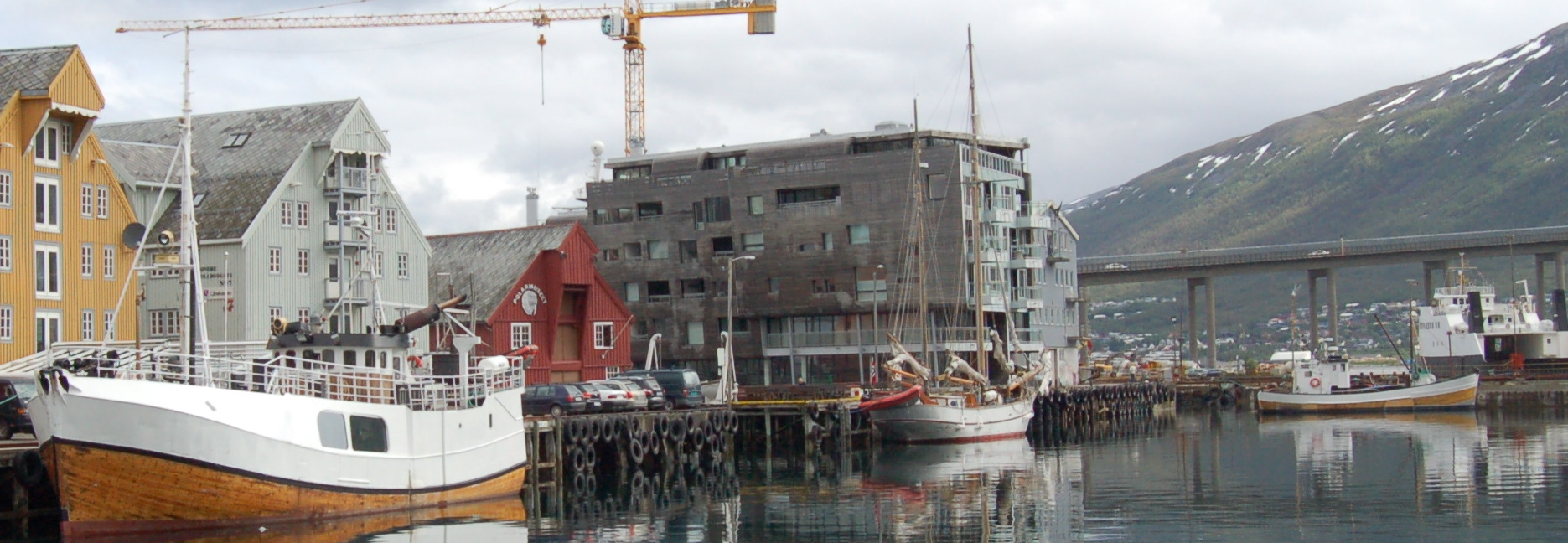
I had the pleasure of being invited to the annual DIPS Forum Tromsø, Norway 2-5 June 2013, to present on openEHR. DIPS is the main Norwegian hospital information system supplier, and the DIPS forum is its annual user/vendor meet-up. (Presentation – YouTube; 32 mins).

Tromso 2013

Something possibly unique is going on in Norway. DIPS is a vendor that originated in hospital IT, and morphed into something like a normal company. Abnormally, it remains very close to its users in the clinical community, under a visionary clinical and engineering leadership that has its eyes firmly on the long term, while never forgetting its audience.

The DIPS Forum is evidence of this relationship: 24 years long, with 650 or so attendees in 2013, it’s larger than an HL7 meeting, and yet consists almost 100% of users from only one country, and only one vendor (plus the odd foreigner;-). My impression is that what the user community really appreciates is the relationship and engagement. It’s the kind of thing bureaucrats dream of creating by ‘programmes’ or ‘reorganisation’ but in fact it can only ever really be ‘grown’ into place. It’s what ensures the product, while probably not perfect on any given day, keeps up with (and sometimes probably overtakes) user needs and aspirations. Continue reading

Posted in Health Informatics, openehr | 2 Comments

Identifying complex knowledge artefacts

Based on a lot of experience, thinking and gnashing of teeth of colleagues Ian McNicoll, Heather Leslie, Sebastian Garde who work on the Ocean Clinical Knowledge Manager (CKM) product, as well as many others using archetypes and archetype tools more generally, I have produced a major update to the openEHR Knowledge Artefact Identification specification draft, here.

Lifecycle management with semver.org versioning.

This specification is designed to answer the following needs for complex, designed artefacts like archetypes, templates and terminology subsets:

  • ‘ontological’ (human readable) archetype, template and subset identifiers
  • machine identifiers
  • references to identified artefacts from other artefacts
  • recording knowledge artefact ids in data
  • lifecycle management and states;
  • dealing with transfer and forking;
  • supporting integrity and non-repudiation.

It combines the concept of lifecycle management for knowledge artefacts with a solid versioning model, mostly lifted from the excellent specification at semver.org.

I have taken a lot of care to ensure this specification works equally well with artefacts produced by other organisations, particular non-openEHR archetypes and similar models. It now needs community input and feedback… i.e. feel free to pull it to pieces.

Posted in Computing, Health Informatics, openehr | Tagged , , , , | 1 Comment

DCMs & archetypes – why we need 3 layers

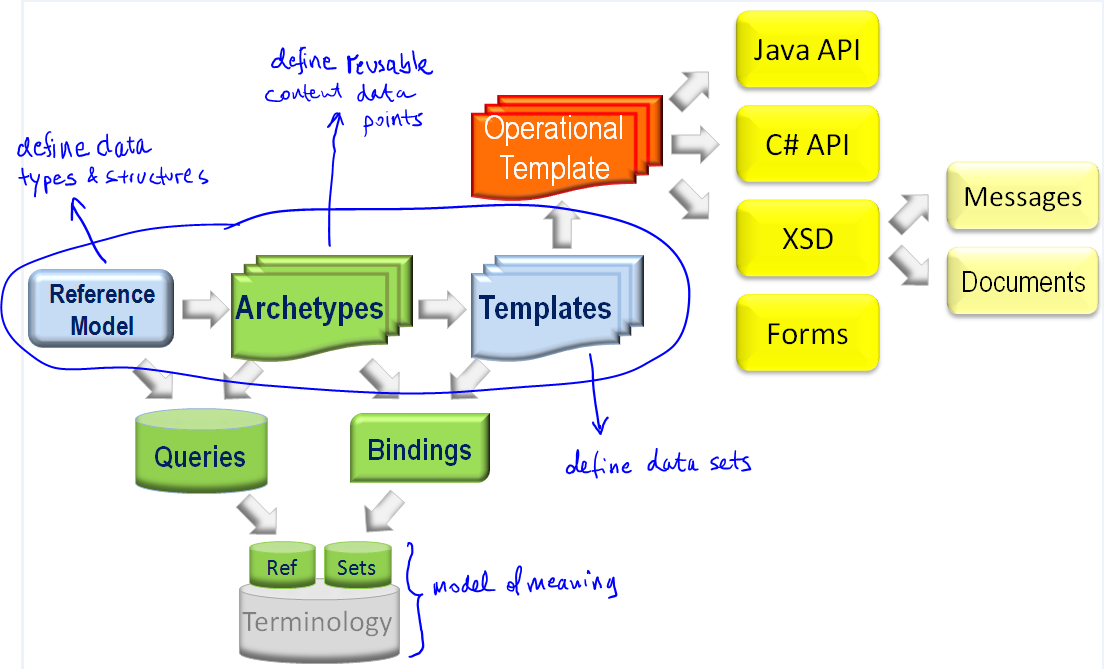
This post is inspired by a slightly out-of-control discussion among people in the CIMI group. It’s a good discussion. The latest question that has come up is whether a DCM (Detailed Clinical Model) is a ‘model of use’ (i.e. some kind of data set) or a ‘model of meaning’ (i.e. some kind of ontological definition).

Continue reading

Posted in Computing, Health Informatics, openehr | Tagged , , , , , | 3 Comments

Models from Intermountain Health – pioneering lessons

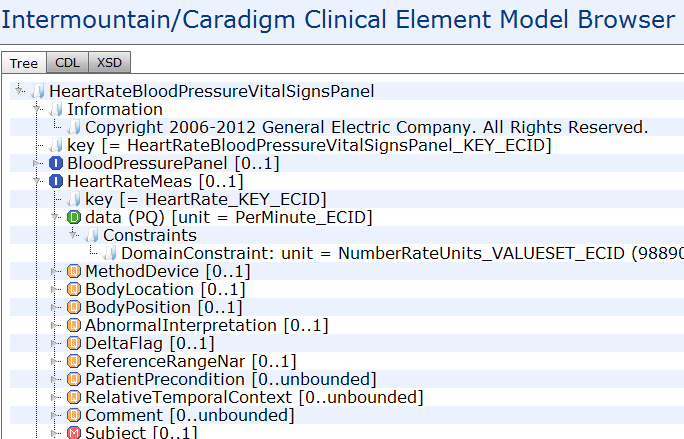
I am back this week from a week in Salt Lake City, visiting Dr Stan Huff’s group at Intermountain Health, a globally recognised centre of excellence for clinical computing. I should have been 10 years ago, but better late than never. Stan has quietly been pioneering model-based health computing for nearly 20 years, featuring Clinical Element Models (CEMs) and terminology.

Intermountain / Caradigm CEM browser

It started with the ASN.1 models used in the (still deployed) 3M system, and progressed through the CEML form (a light-weight XML format developed by Joey Coyle, who just submitted a PhD thesis on the topic) to the current CDL format. CDL stands for Constraint Definition Language, and was co-developed by GE and Intermountain for the Qualibria product. Continue reading

Posted in Health Informatics, openehr | Tagged , , , | 2 Comments

Ontologies in health: ready for prime time? IAO versus openEHR

A lot of ontology work has been going on for some years that comes loosely under the BFO and OBO activities, which stand to improve how computing in health is done. BFO is the Basic Formal Ontology, and OBO is the Open Biological and Biomedical Ontologies. Work from these efforts is currently being used to better structure the upper level of SNOMED CT, in cooperation with the IHTSDO, its owning organisation.

This week I had the opportunity to read a new paper by André Q Andrade, Maurício B Almeida and Stefan Schulz, entitled “Revisiting ontological foundations of the OpenEHR Entry Model” (PDF). This paper seeks to analyse the openEHR ‘clinical investigator ontology’ which Dr Sam Heard and I published in a MedInfo 2007 paper, using the Information Artefact Ontology (IAO) as the reference. Continue reading

Posted in Health Informatics, openehr, Philosophy | Tagged , , , , , | 3 Comments

The power of the openEHR archetype formalism – visualised

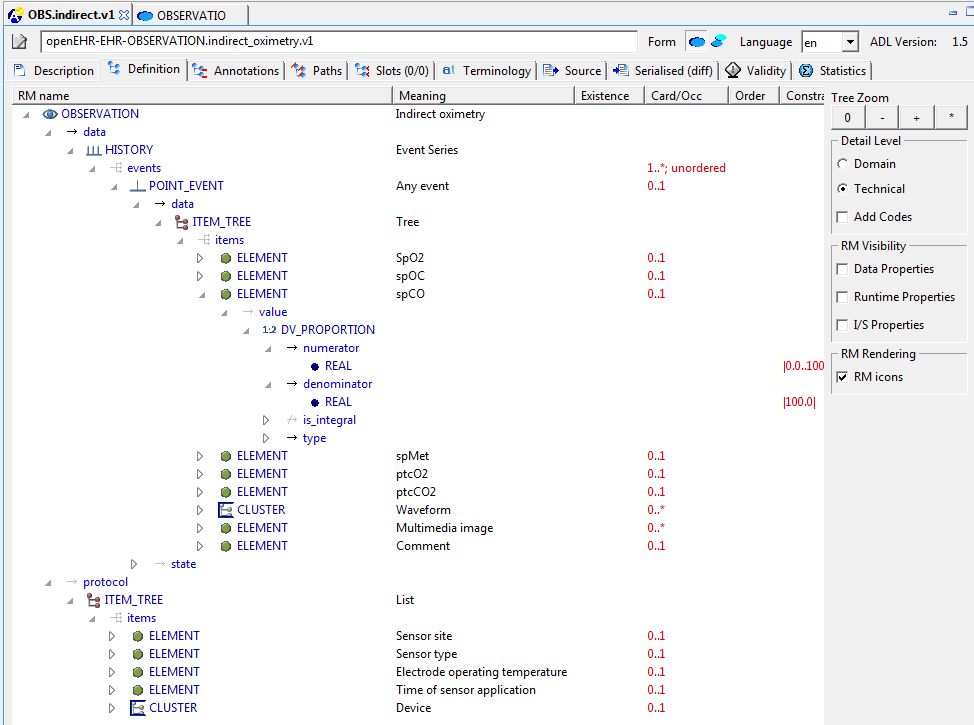
I made a new beta release of the ADL Workbench today, a tool whose core is a parser and 3-pass validator for archetypes written in the openEHR Archetype Definition Language. Today’s release includes visualisation that really shows how archetypes form a layer above standard information models. The basic idea of archetypes, for those who don’t know, is to be able to configure particular structures of reference model instances to represent specific domain content. For example, the following shows the Indirect Oximetry archetype. The tree column shows the information model (or as we call it in e-health more often, ‘reference model’) classes and properties in blue. So an Indirect Oximetry is a structure made from OBSERVATION, HISTORY, POINT_EVENT, etc and a bunch of ELEMENTs, each having specific meanings in the context of the oximetry Observation.

Continue reading

Posted in Computing, Health Informatics, openehr | Comments Off on The power of the openEHR archetype formalism – visualised

The CDA ‘dual-content’ conundrum

In his recent blog post, Eric Browne highlights what may be a problem in the design of the Australian PCEHR, due to the well-known CDA feature allowing dual forms of content – text and structured, supposedly equivalent – to be stored in the one document. If Eric’s examples are representative of real data in the future PCEHR system, there is definitely a problem. In any case, there is a general problem, to do with common misuse of the CDA architecture, which itself should be changed to remove such possibilities. Continue reading

Posted in Health Informatics | Tagged , , , , | 3 Comments